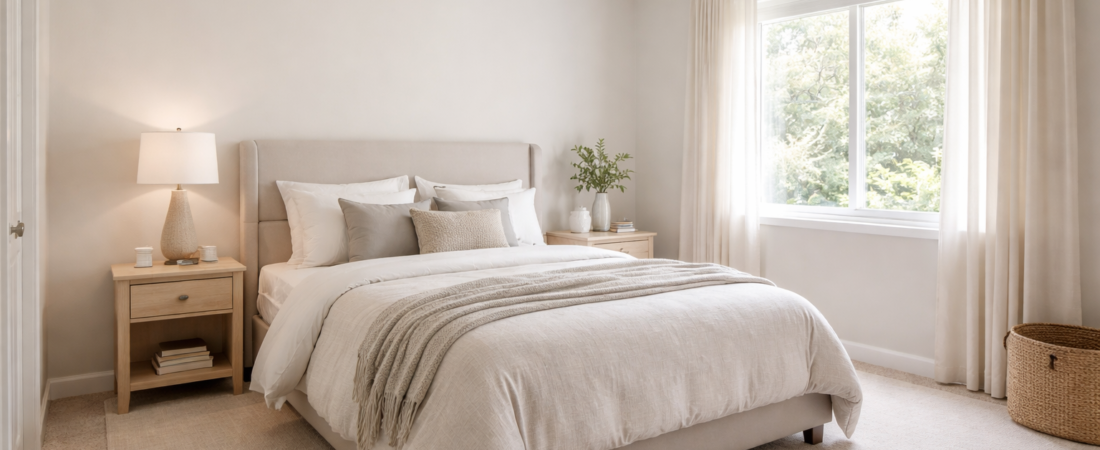
The bedroom plays a larger role in independence than most people realise. It is where the body rests, recovers, and prepares for the demands of the next day. It is also where many people first notice subtle changes in balance, strength, confidence, or fatigue.
A well-set-up bedroom does not aim to “future-proof” against every possible problem. Instead, it quietly supports rest, reduces unnecessary effort, and lowers risk—without making the room feel clinical, crowded, or restrictive.
This article explains how bedroom layout, lighting, surfaces, and routines can work together to support independence as we age, while preserving comfort, privacy, and dignity.
Why the Bedroom Matters More With Age
Sleep quality, physical energy, and confidence are closely linked. Poor sleep can make balance less steady, reaction times slower, and everyday tasks feel harder than they need to be. At the same time, small physical changes—such as stiffness on waking or reduced night vision—are often first noticed in the bedroom.
Because the bedroom is used in low-light conditions and during moments of vulnerability, even minor design choices can have an outsized impact.
A supportive bedroom helps by reducing physical strain when getting in and out of bed, improving orientation and confidence at night, supporting deeper, more restorative sleep, and conserving energy for daytime activities. These benefits are cumulative. Small improvements, consistently applied, can make daily life feel steadier and more manageable.
Bed Position, Height, and Surrounding Space
The bed is the central feature of the room, and its placement influences both safety and ease of movement.
Ideally, there should be clear, uncluttered space on at least one side of the bed—preferably the side most often used for getting in and out. This space allows for stable footing and a natural standing position without twisting or reaching.
Bed height also matters. A bed that is too low can require excessive effort to stand from, while a bed that is too high can feel unstable when sitting down. A supportive height usually allows the feet to rest flat on the floor while seated, with knees at or slightly below hip level.
Surrounding furniture should support, not obstruct, movement. Bedside tables are most helpful when they are sturdy enough to provide light support and positioned within easy reach, without forcing a lean or stretch.
Night-Time Lighting and Orientation
Night-time movement is one of the most common points where confidence drops. Reduced vision in low light, combined with sleepiness, can make familiar spaces feel uncertain.
Effective bedroom lighting does not mean bright overhead lights. Instead, it focuses on gentle illumination that supports orientation without disrupting sleep.
Helpful approaches include a bedside lamp that can be reached easily from bed, soft low-level lighting that defines the path to the doorway or bathroom, and warm light tones that reduce glare and harsh shadows.
The goal is to make the room readable at night—edges visible and pathways clear—without creating visual noise or sudden brightness.
Flooring, Rugs, and Underfoot Stability
What’s underfoot plays a quiet but important role in bedroom safety. Slippery surfaces, loose rugs, or uneven transitions can undermine confidence, especially when waking or moving at night.
Stable flooring with a consistent surface is generally easiest to navigate. If rugs are used, they should lie flat and remain securely in place. Thick pile or curled edges can create uncertainty and are best avoided in main walking areas.
Footwear choices also matter. Supportive, well-fitting slippers or shoes with non-slip soles can significantly improve stability, particularly during night-time movement.
Storage, Reach, and Daily Efficiency
Bedrooms often accumulate items that are used daily—clothing, medications, glasses, or support aids. When these items are difficult to reach, they add unnecessary effort and increase the risk of over-reaching or bending awkwardly.
A supportive bedroom keeps frequently used items at waist-to-shoulder height, within arm’s reach from stable standing or seated positions, and consistently stored in the same place.
This reduces both physical strain and mental effort. When the environment works predictably, confidence grows naturally.
Sleep Quality, Recovery, and Independence
Sleep is not just about rest—it is about recovery. Muscles, joints, and the nervous system all rely on quality sleep to function well during the day.
A bedroom that supports sleep tends to be quiet and free from unnecessary distractions, calm in colour and visual complexity, and consistent in temperature and lighting patterns.
When sleep improves, people often notice better balance, clearer thinking, and more energy for daily tasks. These improvements feed directly into long-term independence.
Preserving Comfort Without Turning the Bedroom Into a “Safety Zone”
One concern many people share is that making changes for safety will make the bedroom feel institutional or limiting. This does not need to happen.
Most effective changes are subtle. Clear pathways, stable surfaces, gentle lighting, and thoughtful layout rarely draw attention to themselves. Instead, they fade into the background, allowing the room to remain personal, familiar, and comfortable.
Independence is supported best when the environment feels like home, not a reminder of decline.
Looking Ahead
The bedroom is often where early changes are first noticed, but it is also one of the easiest spaces to adjust gradually. Small refinements, made early, can prevent larger disruptions later.
In the next articles in this series, we’ll look more closely at getting in and out of bed safely, night-time movement and confidence, and how fatigue and rest shape daily independence.
Taken together, these topics build a clearer picture of how the bedroom quietly supports long-term independence, one night and one day at a time.